
Twice as many Danes suffer from 'gender fatigue' compared to Norwegians. One explanation is that the state has traditionally played a more active role in gender equality policies in Norway.
Danes believe there is too much talk about gender equality
Bilde

The study is based on representative surveys in Norway and Denmark. In both countries, men on the political right and younger men are the most fatigued by the gender equality debate. Photo: Per Palmkvist Knudsen / Wikimedia Commons
Are we witnessing a quiet backlash against gender equality in the Nordic countries?
That question is at the heart of a recent study published in the journal NORA. The researchers explore whether so-called gender fatigue is beginning to spread in Norway and Denmark.
"Backlash is a hard blow – things move backwards. That's easy to understand," says Signe Bock Segaard, researcher at the Institute for Social Research and one of the article's authors.
"Gender fatigue is different. It's about people feeling they've had enough. 'We don’t want to keep talking about gender equality.' 'Why must it always be a key political concern?' 'Can't we just be satisfied with where we are now?'" she explains.
Challenges the idea of a Nordic model
Norway and Denmark are often grouped with the other Nordic countries as global leaders in gender equality. They consistently rank high on international indices, and are therefore often seen as part of a common Nordic model.
Bilde
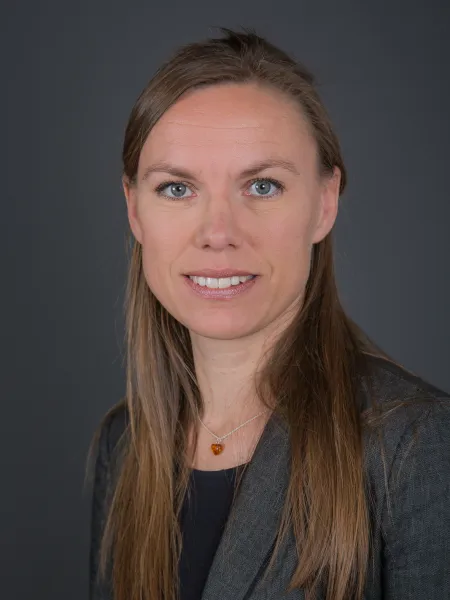
"That view is partly true, especially from an international standpoint," Segaard notes. "But we wanted to challenge the notion of a single Nordic model and instead look at the nuances."
In the article, they ask:
'What happens when countries reach such high positions on the indices? Where does gender equality go from there?'
The researchers analysed data from population surveys in both countries. They find both similarities and clear differences between them.
In both countries, many believe that gender equality has come a long way.
But they disagree more on how highly gender equality should be prioritised.
More active state in Norway
The path towards gender equality has been different in the two countries.
Segaard explains that in Norway, the state has played a clear role.
"Gender equality has for many years been anchored in laws and guidelines," says Segaard.
In Denmark, this work has more often been left to private initiatives.
She adds that in Norway, it has largely become a strong and general norm that there should be gender balance in politics and elsewhere in society.
Gender equality is also a fundamental value in Denmark, but there is more resistance to state intervention.
"In Denmark, responsibility has largely been left to individuals and families. It’s up to you how much you prioritise gender equality," she explains.
As an example, Segaard points to the father's quota in parental leave. Norway introduced this in 1993, while Denmark only adopted a similar measure in 2022, following pressure from the EU. According to Segaard, opposition to such a quota is linked to the more individualised approach to gender equality in Denmark.
Quotas are not an option in Denmark
The differences are also clear when it comes to quotas.
Since the 1980s, Norway has required that at least 40 per cent of members in public boards and committees be from each gender. In 2003, a requirement for gender balance on boards of public limited companies was introduced.
"Denmark has no such requirements. It would be completely out of the question there," says Segaard.
She believes that Danes more strongly support the principle that ‘competence should trump gender.’ And that is a view widely held by both men and women in Denmark.
"It’s not just Danish men who argue this way," she clarifies.
Compared survey data
The new study shows that the differences are not just political, they are also rooted in attitudes.
In Norway, the researchers used data from CORE – the Centre for Research on Gender Equality at the Institute for Social Research. In Denmark, they used comparable representative data collected through the Danish International Social Survey Programme (ISSP).
"One advantage is that Danish and Norwegian are quite similar languages. That allowed us to formulate questions and statements in a way that makes them easier to compare," says Segaard.
About the study
The article Gender Fatigue in the Nordics: Uncovering Covert Backlash (2025), written by Ulrik Kjær, Signe Bock Segaard, and Ditte Shamshiri-Petersen, was published in the journal NORA – Nordic Journal of Feminist and Gender Research.
The study is based on representative surveys conducted in Norway and Denmark, meaning the sample is designed to reflect the broader population – for example in terms of age, gender, and education level.
A key finding is that gender equality fatigue is more widespread in Denmark than in Norway. In both countries, it is most pronounced among men and voters on the political right.
Agree that progress has been made
The first question the researchers asked was whether people believe that 'gender equality has largely been achieved in society.'
"On this point, Norwegians and Danes are actually quite aligned," says Segaard.
About four in ten respondents in both countries believe that gender equality has largely been achieved.
“In other words, there is a broad perception that both Denmark and Norway are countries with gender equality,” she says.
But when researchers ask whether 'gender equality should be one of the most important considerations when shaping policy,' differences begin to emerge. About 10 percentage points more Norwegians than Danes believe that gender equality should be a central consideration in policymaking.
Danes may to a greater extent feel that their right to self-determination is being taken away.
Segaard notes that the question was general and not tied to any specific policy area.
"Norwegians are more likely than Danes to see gender equality as a natural and legitimate consideration in politics in general," she says.
More fatigue in Denmark
The clearest difference between Norway and Denmark appears when researchers ask whether gender equality gets too much attention in public debate.
"This is where the fatigue perspective really becomes visible," says Segaard.
About 40 per cent of Danes feel there is too much focus on gender equality in public discourse, compared with 24 per cent in Norway.
"24 per cent is also a significant share. But the level in Denmark is clearly higher," she says.
Segaard believes the difference may be linked to how gender equality has developed in the two countries, and that in Denmark it is more often seen as a personal matter.
"Danes may feel that their right to self-determination and freedom of choice is being taken away if gender equality and related measures are imposed on them," she explains.
Younger groups most fatigued
So who expresses this fatigue?
The patterns are quite similar in both countries, according to Segaard. Men and voters on the political right are more likely to believe gender equality has already been achieved, to feel there is too much focus on the issue, and to oppose prioritising it in policymaking.
"It's not surprising that both gender and political affiliation play an important role," she says.
Age also matters, according to the researcher. In both countries, younger age groups generally express the most fatigue. But there are some nuanced differences between Denmark and Norway regarding specific age groups.
"It's natural to view these findings about who's driving the fatigue around gender equality in connection with the general shift to the right that has been observed in voter behaviour – especially among younger men," says Segaard.
Bilde
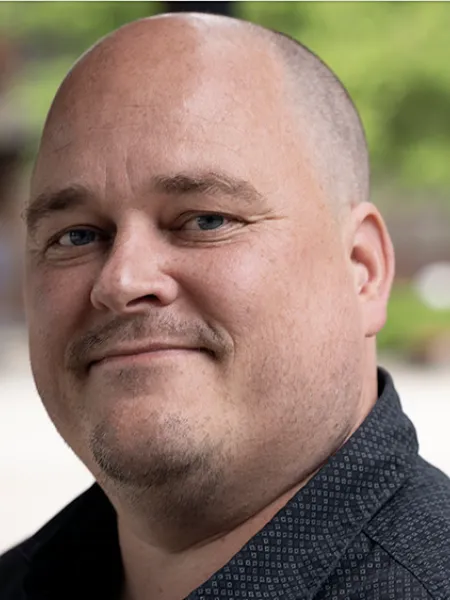
Gender gap found in 13 of 14 countries
Similar trends appear elsewhere in Europe. A recent study of attitudes in 14 Western European democracies found that women hold more progressive political views than men. They are generally more ‘left-leaning’ and more supportive of gender equality.
"There are very few exceptions. We also see that gender gaps in attitudes tend to be larger among younger people than older ones," writes Carl Henrik Knutsen, professor at the University of Oslo and one of the authors of the study, in an email to Kilden magazine.
Younger women are therefore far more progressive than younger men. The gap between the genders is smaller among older generations.
The researchers also compared across countries. They found a clear gender gap in 13 of the 14 countries.
"Only in France do we find no systematic differences between women and men. Norway and Denmark are not among the countries with the largest gender gaps in attitudes towards gender equality in our data, which come from Austria, Finland, Sweden, and Germany, but the differences are still significant," he writes.
Bilde
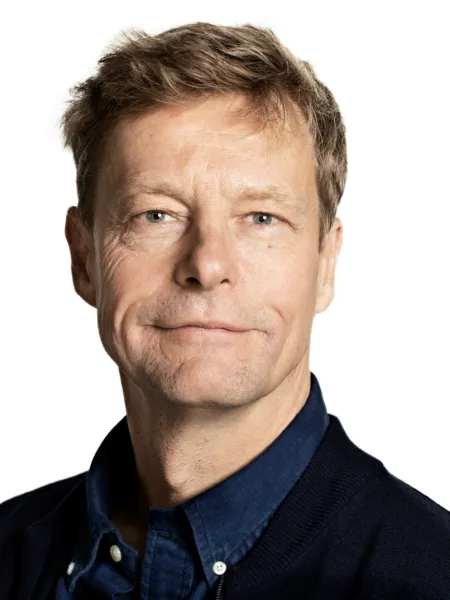
Cautions against labelling young men
Kenneth Reinicke, associate professor at Roskilde University, has studied young men and gender equality. He believes the concept of gender fatigue can be useful, but warns against interpreting it as meaning that people are actually opposed to gender equality.
He also cautions against labelling young men as the problem.
"Research on attitudes towards gender equality generally shows more complex patterns, where gender, generation, education, and political orientation interact," says Reinicke.
He notes that in some studies, young men may express greater scepticism towards certain gender equality policy measures.
"But at the same time, there are also many young men who support gender equality as a norm. A simplified narrative of 'young men as the problem' therefore risks overlooking the significant variation within this group," he says.
The article has been translated from Norwegian by Alette Bjordal Gjellesvik / Science Norway.


