
Men buried in ship graves were described as kings and chieftains, while researchers have been hesitant to portray the women buried in the Oseberg ship as politically powerful.
Research has long underestimated the power of Viking women
Bilde

The two women buried in the richly decorated Oseberg ship in 834 were given a spectacular burial. The photograph is from the Viking Museum at Bygdøy in Oslo. Photo: Kim Hart/Digitalt museum
“Women and power in the Viking Age has been a secondary focus in my research for nearly 20 years, ever since I read up on the Oseberg ship burial, a remarkable Viking Age grave that many people are familiar with,” says Unn Pedersen, Associate Professor of Archaeology at the University of Oslo.
She recently gave a lecture at the humanities festival at the university on women and power in the Viking Age.
The two women who were buried in the richly decorated Oseberg ship in the year 834 received a spectacular burial. The grave contained a large number of artefacts and many sacrificed animals. The artefacts tell us about everyday life, grand events and provide a unique insight into 9th-century society.
A new narrative of power
Nevertheless, the grave’s clear message has been overlooked by many, according to Pedersen.
Bilde

The ship and the two women did not fit into the established narratives about the Viking Age. The women were not regarded as political actors, and the ship was long considered too beautiful to have been anything more than a pleasure vessel. However, the 1904 excavations suggest that Viking Age notions of power were different from what many have assumed. The contents of the monumental burial mound in Vestfold show that Viking Age power was based on much more than physical violence alone.
“To my surprise, I discovered that this grave had been treated very differently from similar men’s graves.”
Pedersen was surprised by how difficult earlier researchers found it to acknowledge the political power of the women buried in the Oseberg ship.
“I was both fascinated and provoked by the fact that men in ship burials were referred to as kings, chieftains or petty kings, while there was a reluctance to describe the women in the Oseberg ship as politically powerful,” she says.
“While writing an article on the topic, published in 2008, I discovered that I was not the first to notice this.”
“The unequal treatment of men’s and women’s graves was already being questioned in the early 1990s by a number of female archaeologists, and a thesis was also written on the subject. But this way of thinking has nevertheless prevailed,” says Pedersen.
“I was surprised that the narrative of powerful men persisted despite clear criticism,” she says.
“The women buried in the Oseberg ship have long been discussed, but to the extent that they have been regarded as influential, their power has largely been seen as religious. The grave has also been interpreted as a sacrifice, a reading rarely applied to men’s graves. This shows that portrayals of Viking Age men can be just as clichéd and constrained as those of women.”
I was surprised that the narrative of powerful men persisted despite clear criticism.
Bound by rigid notions
As an archaeologist, Pedersen works with traces of the past. She is an expert on the Viking Age and studies Iron Age metalworkers, who made jewellery and other ornaments from copper alloys, lead, silver and gold.
When she began her research on the Oseberg ship burial, she aimed to show that it closely resembled ship burials containing men. At the same time, she looked for signs of power in the grave goods and identified, among other things, a tapestry depicting weapons and scenes of warfare.
“One of the things I was fascinated by was a wooden stick shaped like an arrow. Could it have been a military signal sent out to rally people for battle?”
When Pedersen returned to Oseberg several years later, it struck her that she too had been trapped in rigid notions of what power is. She had focused on minor details in the ship burial and had lost sight of the bigger picture.
“So I fell into the trap myself when it came to interpreting what the monumental grave revealed about power.”
One of the distinctive features of the Oseberg ship is its many exquisite wood carvings, which earlier archaeologists have also been interested in, leading them to regard the women buried in the grave as an art collector.
“They argued that the Oseberg ship could not be a proper Viking ship because it was too beautiful. But beauty held a great deal of power during the Viking Age,” says Pedersen.
“In this society, both visual expression and lavish gifts played a major role. Gifts were used, among other things, to establish and maintain hierarchies, while the carved animals in the ornamentation were seen as powerful beings with agency in the world.”
Challenge previous interpretations
What has been described as the Viking Age kitchen instead reveals a large household, according to Pedersen.
“When we factor in what we know about banquets, which were a ruler’s duty and an important social and political arena, we see that those who arranged the burial wanted to emphasise their ability to feed large numbers of people and to host lavish feasts. It is interesting to challenge previous interpretations of history by debunking the myth of women’s limited opportunities.”
According to the researcher, this reflects a broader trend in archaeology that challenges the idea that power is rooted in violence, and that there are also other forms of power. Rather than focusing solely on the individual being buried, the burial ritual can be seen as revealing something about community, social order and the ability to mobilise people.
Support across disciplines
Unn Pedersen initiated the Nordic interdisciplinary research project ‘Gendering the Nordic Past’, bringing together researchers with different approaches to gender.
“We have discussed how gender is expressed in the archaeological material from the Stone Age to the early modern period,” she says.
“This gave me the opportunity to work on the Oseberg ship burial again. It became clear to me that the Oseberg ship reveals a very different story.”
Pedersen has revisited the archaeological material from Oseberg and discussed its defining characteristics. Here, she draws on research from recent decades and on a more nuanced understanding of what power is.
“Communicating academic knowledge and engaging in dialogue with a broad audience is something I’m passionate about. I have, among other things, published three children’s books about the Viking Age and one about the Migration Period,” she says.
“As a researcher, I often work on several research questions in parallel. I’m particularly interested in the people of the Viking Age and how they interacted, so I’m going to keep exploring that.”
Both men and women, as well as other species, are agents who help to shape the world.
Important perspectives
“Unn Pedersen highlights some very important perspectives that reveal how archaeology in the early 20th century was shaped by the underlying worldview of the time, in which power belonged to the male sphere,” says Kristin Armstrong-Oma.
Bilde
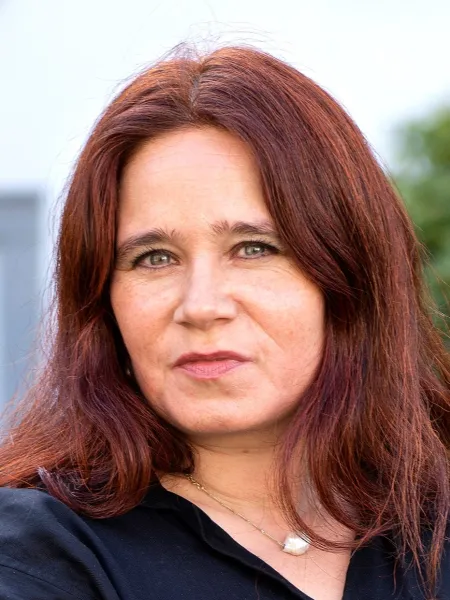
Armstrong-Oma is a professor at the Museum of Archaeology at the University of Stavanger. She recently published the book Flokken – Historien om dyrene og oss fra istid til vikingtid (The herd – animals and humans from the Ice Age to the Viking Age) (in Norwegian only).
“To the extent that women were granted power within this worldview, it was defined by their connection to a powerful man. The Oseberg ship burial is a striking and concrete example of this,” she says.
Although archaeologists such as Anne Stine Ingstad pointed out this prejudice decades ago, the prevailing narrative has taken hold. It has proven difficult to break through with alternative perspectives on gender beyond established, century-old assumptions. Through her research on the Oseberg ship, Pedersen demonstrates the strong societal relevance of archaeology, according to Armstrong-Oma.
Narratives in which women’s power and powerlessness are interpreted in relation to men are still relevant and remain the subject of debate.
Part of a power struggle
Another example is the Egtved Girl who was buried in an oak coffin in southern Jutland around 4,500 years ago.
When new scientific analyses of her teeth and hair revealed that she had undertaken at least two major journeys during the final years of her life, this was quickly interpreted as meaning that she had been married off as part of a power struggle in which women were mere pawns, explains Armstrong-Oma.
“The possibility that she undertook these journeys by virtue of her own status and agency was rarely considered before more nuanced interpretations of her role in society emerged.”
In her own research, Armstrong-Oma has focused on animals and their status in the Viking Age, drawing inspiration from feminist scholars such as Donna Haraway and Lynda Birke.
“Both men and women, as well as other species, are agents who help to shape the world. Animals have thus contributed to the development of society, both in the present day and in the past.”


