
“Without ‘The Second Sex’, most modern feminist theory and philosophy would not exist,” says Toril Moi.
'The Second Sex': Four decades after her death, Beauvoir takes her place in the canon
Bilde

Simone de Beauvoir (1908–1986) was a French existentialist philosopher, political activist and novelist. Her most famous work, "The Second Sex", was published in 1949. It is a philosophical analysis of the situation of women. Photo: Wikimedia Commons
Recently, Simon de Beauvoir’s The Second Sex was published in the prestigious book series La Pléiade, which amounts to inclusion in a semi-official French canon. The works of the French philosopher continue to have a profound impact, 40 years after her death. This impact was discussed at a recent seminar on Beauvoir’s work at the National Library of Norway, where Toril Moi, Tove Pettersen and Kristin Gjesdal, among others, gave talks.
On choosing
Toril Moi gave an introduction to Pyrrhus and Cineas, published in 1944, Beauvoir’s first philosophical essay.
Bilde
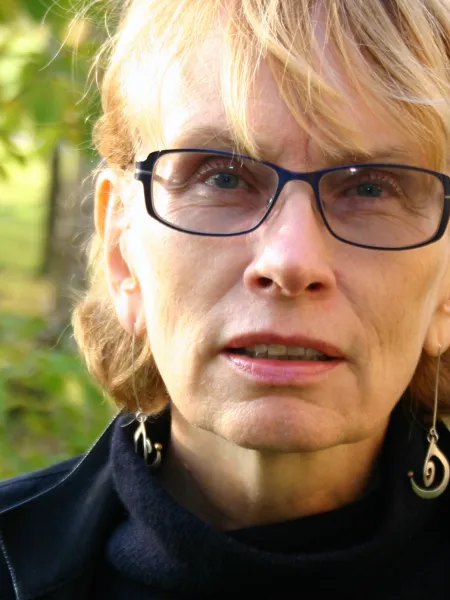
“This work explores how we can find our own projects in the world, and how we should relate to others. It marks the first step on Beauvoir’s path towards The Second Sex, which was published in 1949," Moi writes in an email to Kilden magazine.
Moi is a professor of literature at Duke University and a senior researcher at the National Library of Norway. She has written extensively on Beauvoir, including the book Simone de Beauvoir: The Making of an Intellectual Woman.
“I am particularly interested in the way she discusses choice, and how she shows that our spontaneous actions involve choices, without us actually realising it,” she says.
“To choose is to accept responsibility for actions that may have been entirely unreflective. Here, Beauvoir engages with Kierkegaard’s idea of ‘choosing oneself’. If we do so, perhaps we change. Or perhaps we don’t.”
Inspired Judith Butler
“In your talk, you said that Judith Butler is inspired by Beauvoir; could you elaborate on that?”
“In the 1990 work Gender Trouble, Butler draws on two clear sources of inspiration: Michel Foucault and Simone de Beauvoir. Foucault inspired her to think about overarching ‘discourses’ that shape an individual subject’s understanding of the world,” says Moi.
“Beauvoir inspired her to see gender as an ongoing process of becoming, one that is never complete, in which gender is shaped by how we respond to the pressures of the world around us.”
“What do you think is Simone de Beauvoir’s most important contribution to philosophy, and why?”
“That’s a huge question. But she clearly turned the question of women’s status, and, in particular, what it means to be in the world as a person embodied in a gendered body, into serious philosophical questions,” Moi says.
“Without The Second Sex, we wouldn’t have Frantz Fanon’s understanding of what it means to be in the world in a racialised body. We wouldn’t have most of modern feminist theory and philosophy either. Even thinkers who argue strongly against Beauvoir, such as Luce Irigaray, clearly engage with her fundamental ideas.”
Moi believes that Beauvoir has a great deal of insight to offer into what it means to live in a world shared with others.
“In Pyrrhus and Cineas, for example, she shows that our own projects become meaningless without others in the world to respond to them. And I also think she writes very interestingly about how literature, philosophy and existence are intertwined.”
Beauvoir, and the culture she was part of, saw philosophy as the practice of asking fundamental questions about our existence.
Omitted 80 women
“Beauvoir did important work in The Second Sex by drawing attention to women artists and writers,” says Kristin Gjesdal, whom Kilden magazine interviewed a few days after the seminar at the National Library.
Bilde

“There were so many names that the English translator omitted around 80 of them from the first English translation. The names were unfamiliar to English readers, and he wanted to make the work easier for them to understand. Fortunately, those names have been restored in the latest translation of The Second Sex.”
Gjesdal is a professor of philosophy at Temple University and has written extensively about women in the history of philosophy. She questions why, despite the many references to women artists and writers, Beauvoir drew so little on earlier women philosophers in The Second Sex.
“Among the many women writers she mentions are Clara Zetkin and Rosa Luxemburg, for example, but Beauvoir does not discuss them as philosophers.”
As Beauvoir argues in The Second Sex, women have lived under conditions that have prevented them from achieving true intellectual and artistic greatness, Gjesdal explains.
“She believed that women could become accomplished and produce important work, but that the lives they led as ‘the second sex’ made it almost impossible for them to take that final, decisive step toward greatness. But, strangely enough, Beauvoir never asked the question: What is ‘greatness’? And is it right to assume that the capacity for ‘greatness’ belongs to men alone?”
Did not regard women as philosophers
For that reason, Beauvoir may have assumed that women had not contributed to the philosophical canon, Gjesdal says.
“Beauvoir, and the culture she was part of, saw philosophy as the practice of asking fundamental questions about our existence. She seemed to believe that women, given their cultural and social circumstances, could contribute to art and culture, but not to the rational, in-depth analysis of what it means to be human.”
In her analysis of women’s situation in The Second Sex, Beauvoir draws on several other philosophers, but almost exclusively men, including Aristotle, Kant, Hegel, Nietzsche, Marx and Engels, Gjesdal points out.
“At the same time, it would be unfair to blame her directly for this. After all, she lived in a culture in which she herself was a pioneer. And if she wanted to succeed as an academic philosopher in the 1940s, writing about other women in philosophy would hardly have been a smart career move.”
Germaine de Staël, Hedwig Dohm and Clara Zetkin
But were there women philosophers before Beauvoir who had systematically examined women’s lives and whose work she could have drawn on in The Second Sex? Yes, says Gjesdal, pointing to three examples: Germaine de Staël (1766–1817), Hedwig Dohm (1831–1919) and Clara Zetkin (1857–1933).
“Beauvoir mentions Staël’s biography several times, but not her philosophy,” Gjesdal says.
“Like Beauvoir, Staël was concerned with the fact that women were not fully recognised in society. So, she uses essentially the same argument as Beauvoir, but in different terms.”
And Dohm, like Beauvoir, believed that one was not born a woman, but rather shaped into one by culture.
“Dohm, at one point, writes that if you are born with an ‘essence’ that is supposed to determine your entire life and way of being, you might as well have been stillborn,” says Gjesdal.
“Like Beauvoir, Dohm was inspired by Nietzsche, but criticised him and other male philosophers for their misogyny.”
Zetkin, too, could have been a useful thinker for Beauvoir to engage with, as she spent her life analysing the relationship between misogyny, equality and capitalism, Gjesdal says.
“This is also a theme in Beauvoir’s work, but one that she does not fully develop: That a woman cannot achieve full freedom without financial freedom. She also mentions that if she were to write The Second Sex again, economic analysis would play a much more central role.”
“There was, then, a body of philosophical thought by women in the history of philosophy that would have been highly relevant to Beauvoir, but she did not access it as she didn’t take these women seriously as philosophers,” Gjesdal says.
Went on to champion other women
Gjesdal emphasises that Beauvoir’s views changed during the 1970s.
“She gradually became more aware of other women in philosophy. In doing so, she may also have made the field a more welcoming place, including for herself.”
“What do you think is Simone de Beauvoir’s most important work?”
“The Second Sex is undoubtedly her most influential work. But today, there is also a great deal of fascinating work being done on her earlier texts, such as Pyrrhus and Cineas and The Ethics of Ambiguity. Her work on old age is also philosophically significant,” says Gjesdal.
“It’s not just scholars interested in existentialism who have found inspiration in Beauvoir’s work. She has also made significant contributions to answering questions such as: What makes a good person? What is right and wrong? How can we best understand the relationship between mind and body? Between reason and perception?”
“Her literary and autobiographical works are also philosophically significant and are increasingly being read and discussed at seminars and conferences,” she concludes.
When Beauvoir writes that ‘one is not born, but rather becomes, a woman,’ she points to how society’s norms, institutions and expectations shape gender identity and gender roles.
Changed the way we think about gender
Tove Pettersen began her talk by noting that The Second Sex was only included in the French canon this year, with its publication in the prestigious La Pléiade classics series, published by Gallimard.
Bilde
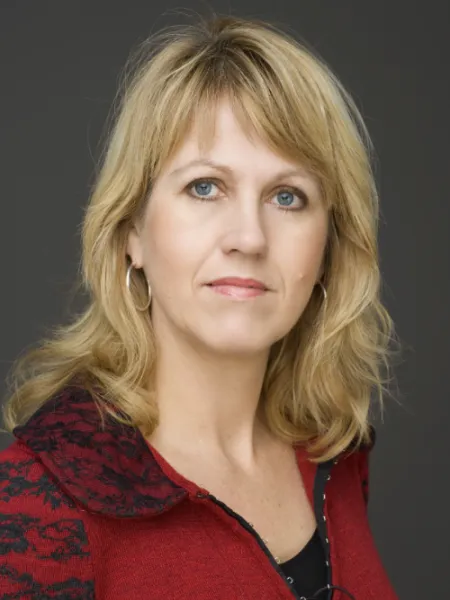
Pettersen is a professor of philosophy at the Centre for Gender Research at the University of Oslo. Her areas of specialisation include feminist history of philosophy and Beauvoir’s existentialist ethics.
“Since feminist philosophy emerged as a field in the 1970s and 1980s, many scholars have worked on Beauvoir’s philosophy. Over the past few decades, it has become increasingly clear just how groundbreaking and philosophically original her work really is. It is no longer possible to overlook her in the national canon,” she explains in an email to Kilden magazine.
“The work radically breaks with the idea that gender is simply something biological and unchanging,” Pettersen explains.
“When Beauvoir writes that ‘one is not born, but rather becomes, a woman,’ she points to how society’s norms, institutions and expectations shape gender identity and gender roles. That what many people perceive as ‘natural’ differences between women and men are in fact social constructs that serve an unequal power relationship between the sexes.”
Laid the foundation for feminist philosophy
According to Pettersen, one of Beauvoir’s most important contributions is her existentialist ethics, in which she shows how freedom and oppression are both gendered and shaped by one’s situation.
“Beauvoir shows that philosophical concepts such as freedom, responsibility and subjectivity cannot be understood purely in the abstract, but must be examined through everyday life, work, love, sexuality and care,” she says.
“Her analysis of how ‘the Other’ is constructed, and how this process legitimises relations of power, is also particularly important. She shows that philosophy can be used to legitimise the construction of certain groups of people as ‘the Other’, but that it can also serve as a tool for liberation and social change.”
Beauvoir laid the foundation for feminist philosophy as a distinct field, in which the experiences of women and other marginalised groups are taken seriously as philosophical material, Pettersen explains.
“Precisely because she combines philosophy with empirical evidence, individual experiences with structural analysis, her theories have had a lasting significance far beyond her own time.”
“Are Beauvoir’s ideas still relevant today? And if so, why?”
“Because many of the structures, assumptions and attitudes she describes have not disappeared, but have instead taken different forms. Although women in our part of the world have more rights than they did in her time, gender-segregated labour markets, gender pay gaps, violence against women and expectations around caregiving still persist.”
Pettersen points out that the analysis of how certain groups are constructed as ‘the Other’ can also be applied to racism, ableism and age discrimination, among other forms of discrimination.
“At a time when there is so much debate about gender, age, race and sexuality, Beauvoir gives us tools for understanding the connection between individual experiences and structural conditions. That is why her work continues to be read and discussed, and why many of the questions she raised – about how we can live freely and equally together – remain far from resolved.”
The article has been translated from Norwegian by Totaltekst.


